
Sub-Total: $0.00
Echinacea
Echinacea spp. (Echinacea purpurea, Echinacea angustifolia, Echinacea pallida)
Asteraceae (Daisy family)
The Guardian of Immunity and Resilience
Other names:
Purple Coneflower, American Coneflower

Superpower
Immune-modulating powerhouse, revered for its ability to enhance the body’s natural defenses.
Uses
Traditional Uses
Echinacea has deep roots in North American Indigenous medicine, particularly among the Plains tribes, who used both the root and aerial parts for infections, snakebites, and wound care. The plant was considered a sacred protector and purifier — strengthening the body’s resistance to infection and drawing out toxins.
Early Eclectic physicians of the 19th century adopted Echinacea widely as an “alterative” and “blood purifier,” using the whole plant for septic conditions, abscesses, and respiratory infections.
Root (Radix)
Traditionally chewed or decocted for snakebites, infected wounds, sore throats, and toothaches. Used internally as an immune stimulant and lymphatic cleanser.
Current Uses:
-
Immune support and resistance building during acute infection (cold, flu, sore throat, bronchitis).
-
Lymphatic and detoxifying support in swollen glands, skin eruptions, and inflammatory conditions.
-
Topical antiseptic and wound-healing agent in salves and washes.
-
Helps shorten duration and intensity of upper respiratory infections.
-
Root is considered stronger for deep infection, septic states, and systemic immune stimulation.
Flowering Tops (Aerial Parts)
Used fresh as poultices and washes for wounds, bites, and burns. The aerial parts were also made into teas or tinctures for mild infections, fevers, and colds when roots were less available.
Current Uses:
-
Supports early-stage or surface infections (sore throats, mild colds).
-
Encourages local immune activation and tissue repair at mucosal surfaces.
-
Gently stimulates lymphatic drainage and circulation without being overly heating or intense.
-
Excellent for preventive use and maintaining immune resilience over time.
-
Often used in combination with root preparations for a more balanced immune and lymphatic tonic.
-
Flowering tops are energetically lighter and more cooling than the root — suitable for long-term toning.
Cautions
Generally safe for most people, but those with autoimmune disorders should use with caution.
May cause mild allergic reactions in individuals sensitive to the Asteraceae family.
Known Chemical Constituents
Root
-
Alkamides (isobutylamides): major active compounds; modulate immune response and exhibit antimicrobial activity.
-
Caffeic Acid Derivatives: echinacoside, cynarin, chlorogenic acid — antioxidant and immunostimulant.
-
Polysaccharides: immunomodulatory and macrophage-activating effects.
-
Volatile Oils: trace; contribute to antimicrobial action.
-
Glycoproteins: support nonspecific immune response.
-
Polyacetylenes: antimicrobial and anti-inflammatory.
Flowering Tops
-
Polysaccharides: higher in concentration than roots; responsible for immune-modulating and demulcent effects.
-
Caffeic Acid Derivatives: chicoric acid (especially in E. purpurea), caftaric acid — potent antioxidants and immune-supportive compounds.
-
Flavonoids: quercetin, kaempferol — antioxidant and anti-inflammatory.
-
Alkamides: present in smaller amounts than in root but still contribute to lymphatic stimulation.
-
Phenolic Compounds: rosmarinic and chlorogenic acids — supportive to connective tissue and microcirculation.
-
Glycoproteins & Lectins: immunomodulatory constituents stimulating macrophage activity.
Botanical Description
Habitat: Native to North America, commonly found in prairies and open woodlands.
Leaves: Lance-shaped, coarse, and slightly hairy.
Stems: Erect, sturdy, and covered in fine hairs.
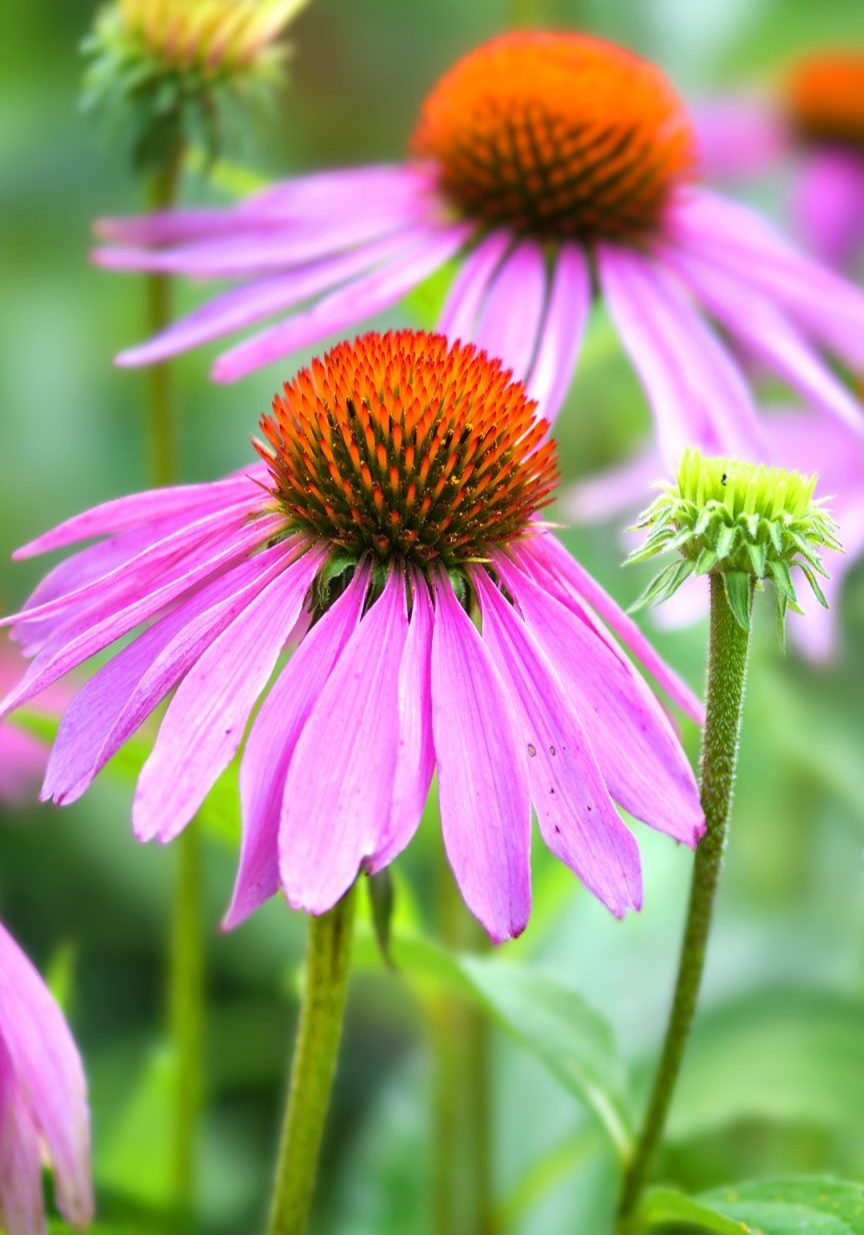
Flowers: Prominent cone-shaped center with purple, pink, or pale lavender petals that slightly droop.
Roots: Thick, fibrous, and deeply penetrating.
Fun Facts
Echinacea was one of the most widely used medicinal plants in the United States before the introduction of antibiotics.
Parts Used
Root, aerial parts (flowers and leaves).
Harvest
Aerial parts: harvested at the onset of flowering, when petals are still narrow and not yet fully expanded.
Roots: Best collected in autumn after the aerial growth has senesced, allowing for the concentration of beneficial constituents.
Preparations
Tincture: Often made from root or whole plant.
Tea: Dried roots and leaves steeped in hot water.
Capsules: Encapsulated powdered root.
Topical: Poultices and salves for wound healing.
Sacred Rituals
Used in herbal amulets and charms for protection and spiritual fortification. Often included in healing ceremonies.
Affirmations
“I am strong, resilient, and protected as I walk in harmony with nature.”
Spiritual Associations
Symbolizes protection, healing, and resilience. Often used in rituals for strengthening spiritual immunity and warding off negativity.
Functions
Products containing Echinacea

Echinacea Flowering Tops (Echinacea purpurea)
Sustainably grown and harvested through regenerative agricultural practices on small U.S. farms dedicated to soil health, biodiversity, and ethical stewardship.
Sourced directly from the grower for quality and freshness, then hand-packaged in small batches to preserve vitality.
Sold by the ounce. Example: Quantity 4 = 4 oz.
Related Ingredietnts by function
Discover other products with similar functions and potency
Related Ingredietnts by function
Discover other products with similar functions and potency
Related Ingredietnts by function
Discover other products with similar functions and potency
Related Ingredietnts by function
Discover other products with similar functions and potency
Related Ingredietnts by function
Discover other products with similar functions and potency
Related Ingredietnts by function
Discover other products with similar functions and potency
Related Ingredietnts by function
Discover other products with similar functions and potency
Related Ingredietnts by function
Discover other products with similar functions and potency
Related Ingredietnts by function
Discover other products with similar functions and potency
Related Ingredietnts by function
Discover other products with similar functions and potency