
Sub-Total: $0.00
Botanical Description
Explore our calendar of upcoming events, plant walks, and medicine-making classes.
TCM Perspective
Explore our calendar of upcoming events, plant walks, and medicine-making classes.
Ayurvedic Perspective
Explore our calendar of upcoming events, plant walks, and medicine-making classes.
Spiritual Associations
Explore our calendar of upcoming events, plant walks, and medicine-making classes.
Preparations
Explore our calendar of upcoming events, plant walks, and medicine-making classes.
Cautions
Explore our calendar of upcoming events, plant walks, and medicine-making classes.
Fun Facts
Explore our calendar of upcoming events, plant walks, and medicine-making classes.
Sacred Rituals
Explore our calendar of upcoming events, plant walks, and medicine-making classes.
Affirmations
Explore our calendar of upcoming events, plant walks, and medicine-making classes.
Known Chemical Constituents
Explore our calendar of upcoming events, plant walks, and medicine-making classes.
Chakra Associations
Explore our calendar of upcoming events, plant walks, and medicine-making classes.

Products containing Ingredient Template
Discover our collection of artisanal salves for holistic healing.
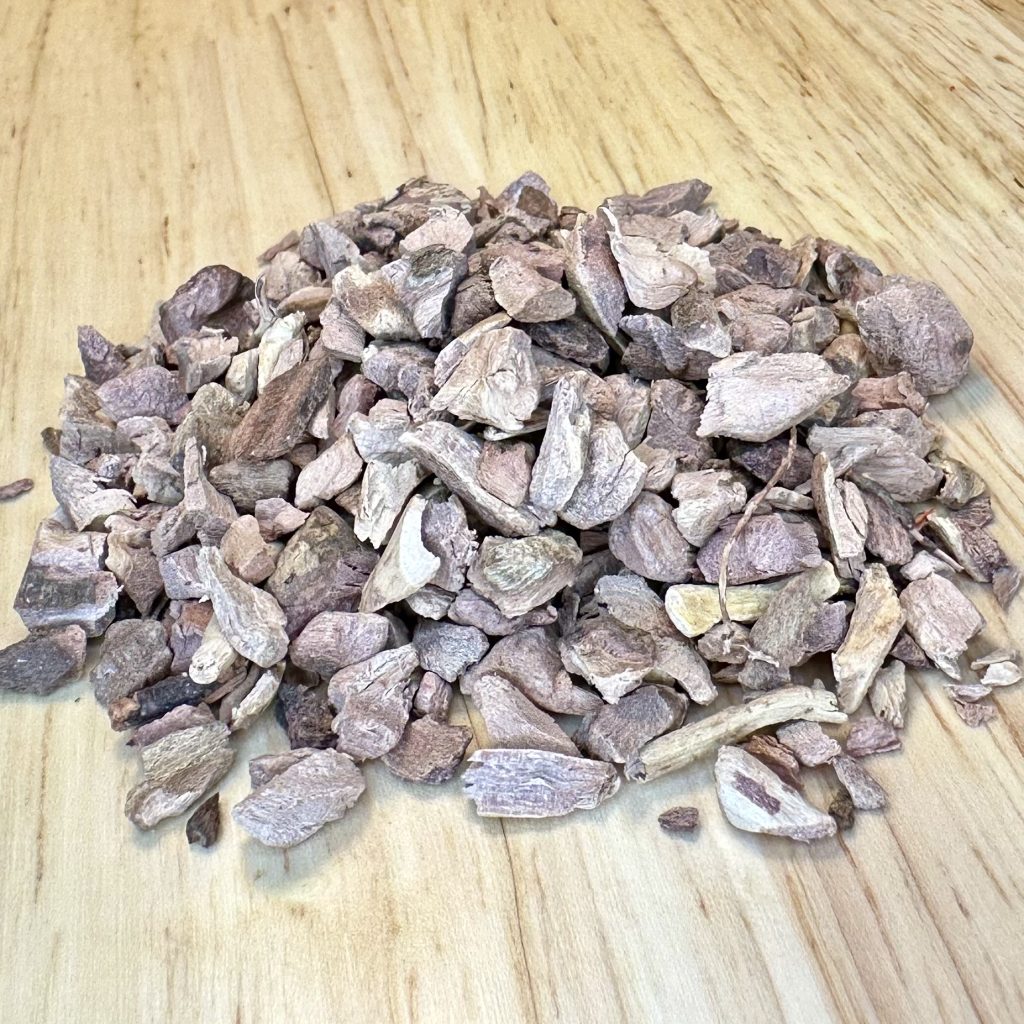
Red Root (Ceanothus americanus)
Uses
Historical Use:
Ceanothus americanus, commonly known as New Jersey Tea, has a long history of use by Native American tribes and colonial settlers. Traditionally, it was used to stimulate the lymphatic system, detoxify the body, and support immune function. The roots were often decocted to treat conditions involving swollen glands, sore throats, and congestion in the lymph nodes. During the American Revolutionary War, the leaves were famously used as a substitute for tea.
Current Uses:
- Lymphatic Support: Today, Red Root is widely used to stimulate the lymphatic system, promoting the removal of toxins and reducing swollen lymph nodes. It is particularly helpful in conditions where the body needs support in clearing waste and excess fluids.
- Immune Health: Red Root’s detoxifying properties also make it valuable for immune support, helping the body fight infections by improving circulation and lymphatic drainage.
- Digestive Health: The astringent and bitter properties of Red Root make it useful for digestive complaints, such as diarrhea, dysentery, and intestinal inflammation.
- Respiratory Support: Red Root is sometimes used to treat respiratory congestion and chronic bronchitis, helping to clear mucus and reduce inflammation in the lungs.
Want to learn more? Visit our Materia Medica section and search for this herb to explore its history, uses, energetics, and more.
$6.70
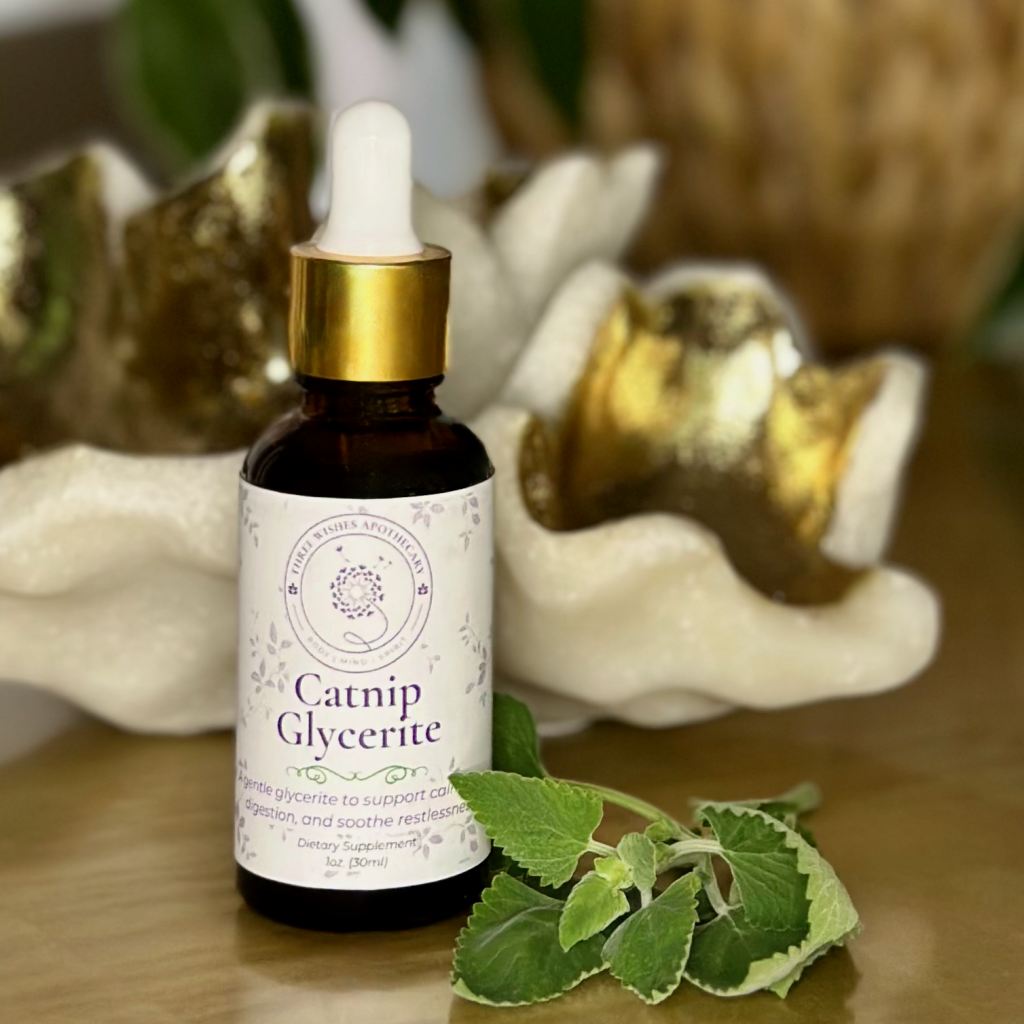
Catnip Glycerite
Archetypal Resonance
For the tender-hearted, the over-stimulated, the fussy and frazzled—this gentle formula is for anyone who needs a soft landing and a moment to exhale.
Description
Catnip is more than a feline favorite—it’s a classic herb in traditional Western herbalism for calming the nervous system, supporting digestive ease, and relieving tension in both body and mind. This glycerite extract offers a gentle, sweet-tasting alternative to alcohol-based tinctures, making it suitable for children, elders, and those with sensitivity to alcohol.
A wonderful companion during overstimulation, sleeplessness, or when the gut and mood feel out of sync.
DOSAGE
Adults:
1–2 mL up to 3x daily as needed
Use during moments of nervous tension, digestive upset, or before bed to unwind. Take directly or diluted in a small amount of water or tea.
Children: (Use as needed for colic, restlessness, irritability, digestive discomfort, or bedtime support)
6 months–1 year:
1–3 drops in breastmilk, formula, or warm water, 1–2x daily as needed
Best used for colic, fussiness, or sleeplessness—especially in the evening
1–3 years:
5–10 drops diluted in a little water or herbal tea, up to 3x daily
For teething, tummy upset, overstimulation, or transition times like bedtime
4–7 years:
0.5 mL (approx. 10–15 drops), up to 3x daily
Use for digestive discomfort, emotional outbursts, or wind-down routines
8–12 years:
0.5–1 mL up to 3x daily
Support during stress, sensitivity, or unsettled sleep
Pets: (For anxiety, travel, or digestive support—consult your holistic vet)
Cats & small dogs: 1–3 drops
Medium dogs: 3–5 drops
Large dogs: 5–10 drops
Mix into food or water, or give on a treat
Price range: $15.00 through $45.00
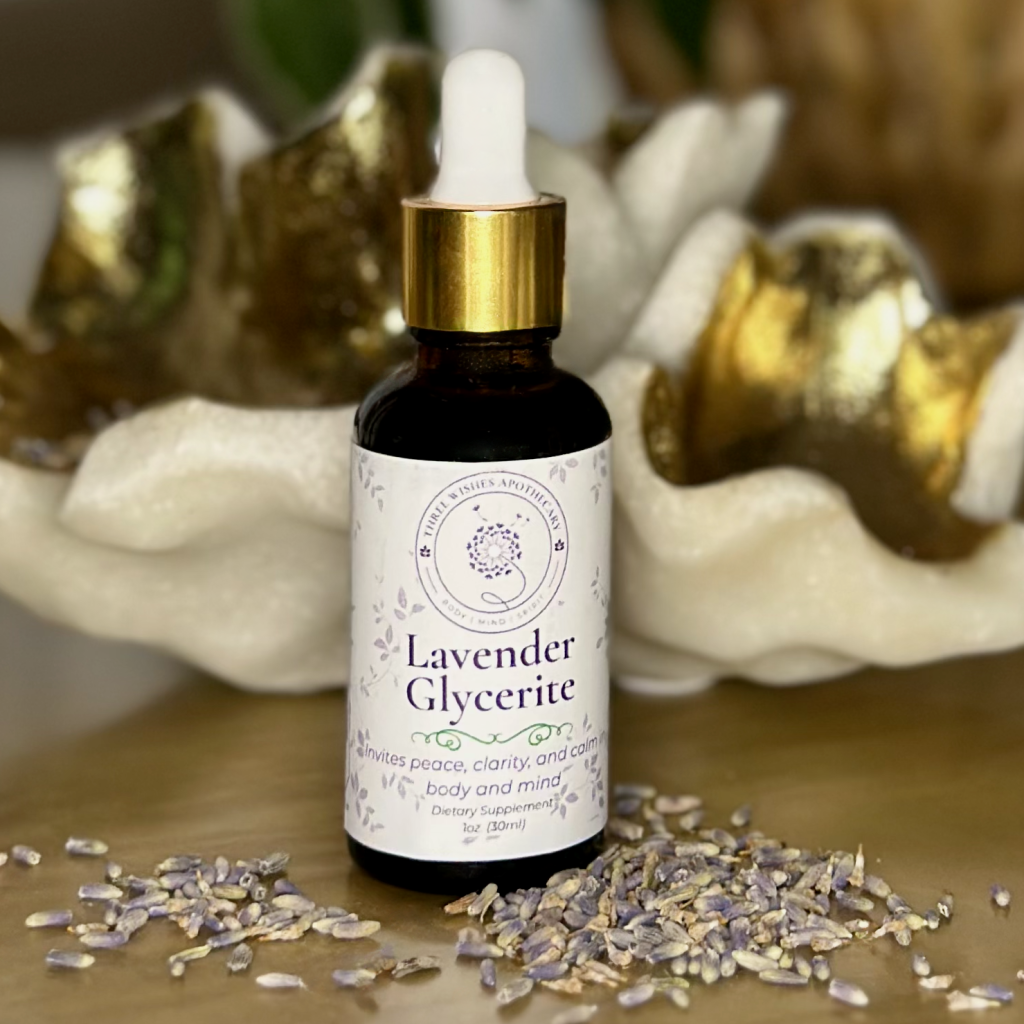
Lavender Glycerite
Lavender is a calming nervine with gentle antispasmodic and carminative qualities. It soothes frayed nerves, quiets mental chatter, and helps restore emotional harmony. In glycerite form, Lavender offers sweet, accessible calm, especially well-suited for sensitive individuals, children, and those avoiding alcohol.
Dosage Details:
Adults: 1–2 mL, 1–3x daily
For nervous tension, sleep support, or emotional irritability
Children (1–12 years): 0.5–1 mL, 1–2x daily
Soothing for worry, restlessness, or bedtime challenges
Elders: 1–2 mL, 1–2x daily
Supports gentle calm, digestive ease, and clarity
Cautions:
May be mildly drying; use with caution in very dry constitutions
No major contraindications known when used in moderate doses
Pregnancy: Generally considered safe; best used in moderation
Nursing: Safe
Safe for long-term use in appropriate amounts
Price range: $15.00 through $45.00
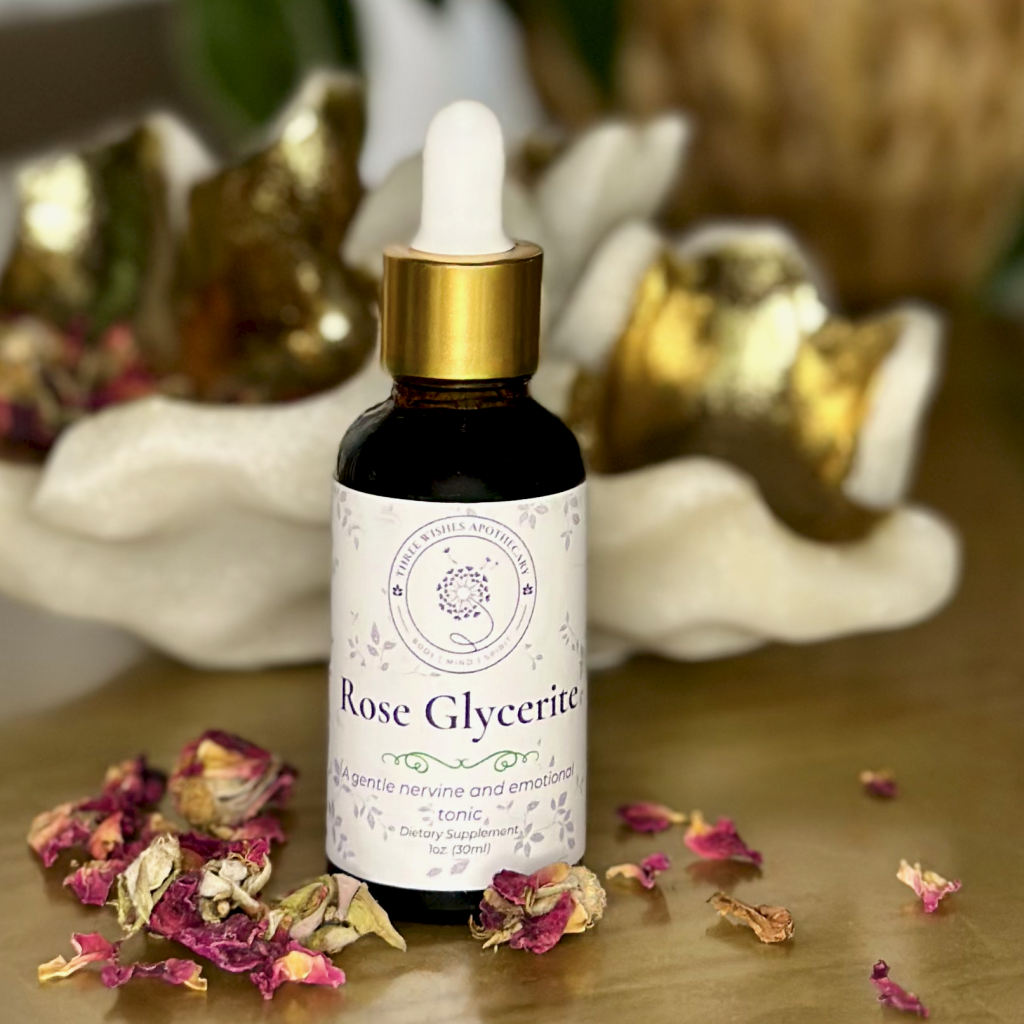
Rose Petal Glycerite
For the tender-hearted, the emotionally sensitive, the lovers and the grieving. This is for those in need of softening, heart-centering, and emotional nourishment.
Rose is more than a balm for the heart—it’s a true energetic harmonizer, working gently but deeply on the tissues and emotions alike. According to herbal traditions and clinical insights:
Lymphatic Support: Rose acts as a gentle lymphatic mover, especially helpful in cases of heat, puffiness, or chronic low-grade stagnation.
Red, Inflamed Tissue States: Traditionally used for “hot” conditions marked by redness, irritation, or heat in the mucous membranes (think sore throats, puffy gums, conjunctivitis).
Venous Congestion & Capillary Fragility: A cooling tonic for venous stagnation, helping reduce bruising, mild hemorrhoids, or feelings of heaviness in the limbs.
Menstrual & Pelvic Tone: Rose gently tones and cools inflamed or irritable tissues in the reproductive tract, especially when paired with grief, resentment, or heartache.
Chronic Diarrhea & Bedwetting (Children): Historical use includes support for childhood bedwetting (often paired with nervous tension or emotional trauma), and mild cases of chronic diarrhea with heat and depletion.
Sore Throats & Throat Tightness: Particularly useful when soreness is accompanied by emotional grief, shame, or the need to “swallow” one’s feelings.
Angina & Heart Palpitations (Emotionally-Tied): Soothes the energetic heart and supports physical tension patterns held in the chest.
Rosa centifolia is cooling, moistening, and gently astringent—making it well-suited for hot, inflamed, or dry constitutions, especially when emotional states mirror those qualities (fiery, irritated, restless, depleted).
Plant Allies in this Formula:
-
Rose Petals (Rosa centifolia) – Comforts the emotional heart, supports nervous system regulation, and invites self-love, sensuality, and serenity.
Dosage:
Adults: Take 1–2 mL directly on tongue or in a small amount of water, tea, or juice. May be taken 1–3 times daily or as needed for emotional support.
Children (age 2+): Take 1–5 drops on tongue or in water, juice, or herbal tea, 1–2 times daily.
Gentle enough for regular use. Especially supportive during moments of grief, overstimulation, bedtime transitions, or emotional upset.
Pairs beautifully with: lullabies, cuddle time, breathwork, journaling, or moonlight walks.
Cautions:
This glycerite is gentle and generally safe for all ages. As with any new botanical, consult your healthcare provider if pregnant, breastfeeding, or taking medications.
Price range: $15.00 through $25.00