
Sub-Total: $0.00
Medicinal Action

Expectorant (clears mucus)

Products containing Expectorant (clears mucus)
Discover our collection of artisanal salves for holistic healing.
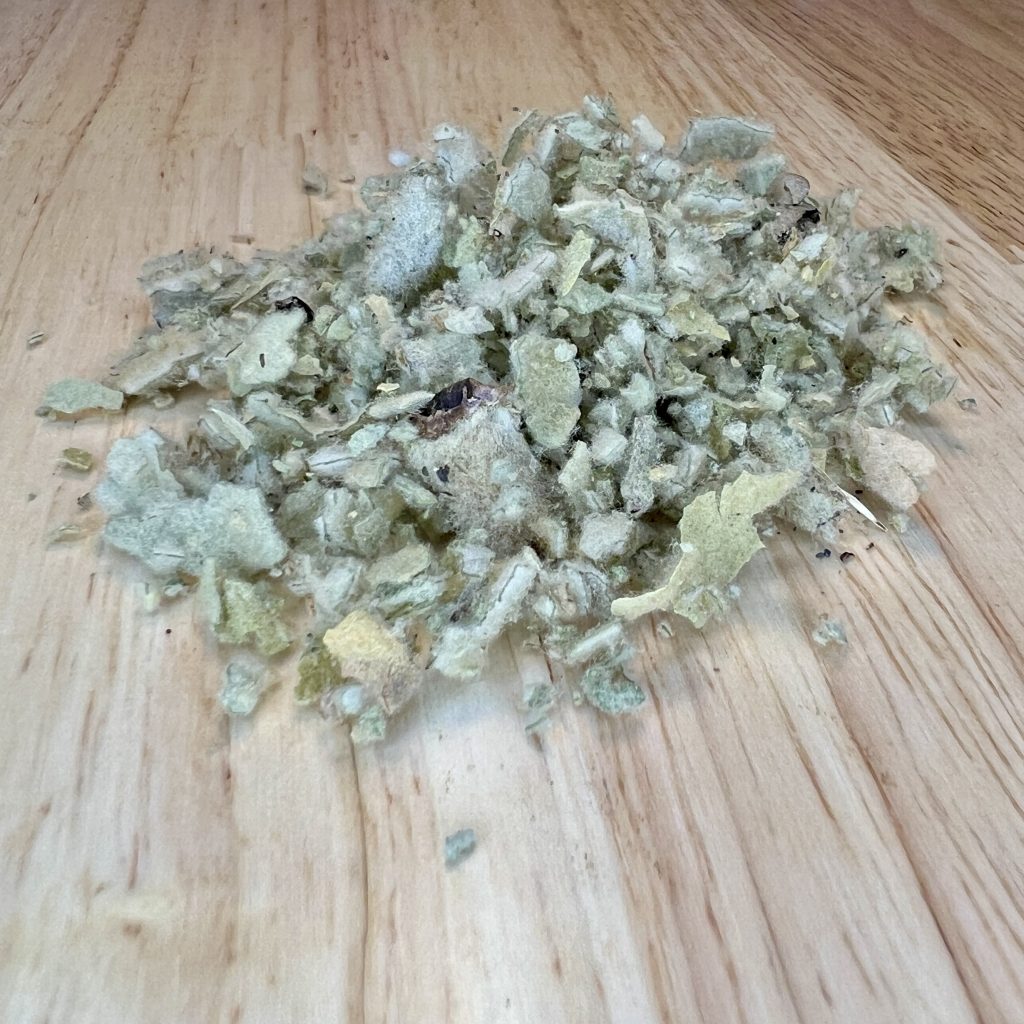
Mullein Leaf (Verbascum thapsus)
Carefully sourced, always organic, and packaged by hand, our herbs are sold by the ounce. To order more, adjust the quantity in 1 oz increments.
Example: Quantity 4 = 4 ounces.
Monographs with the (Expectorant (clears mucus)) function
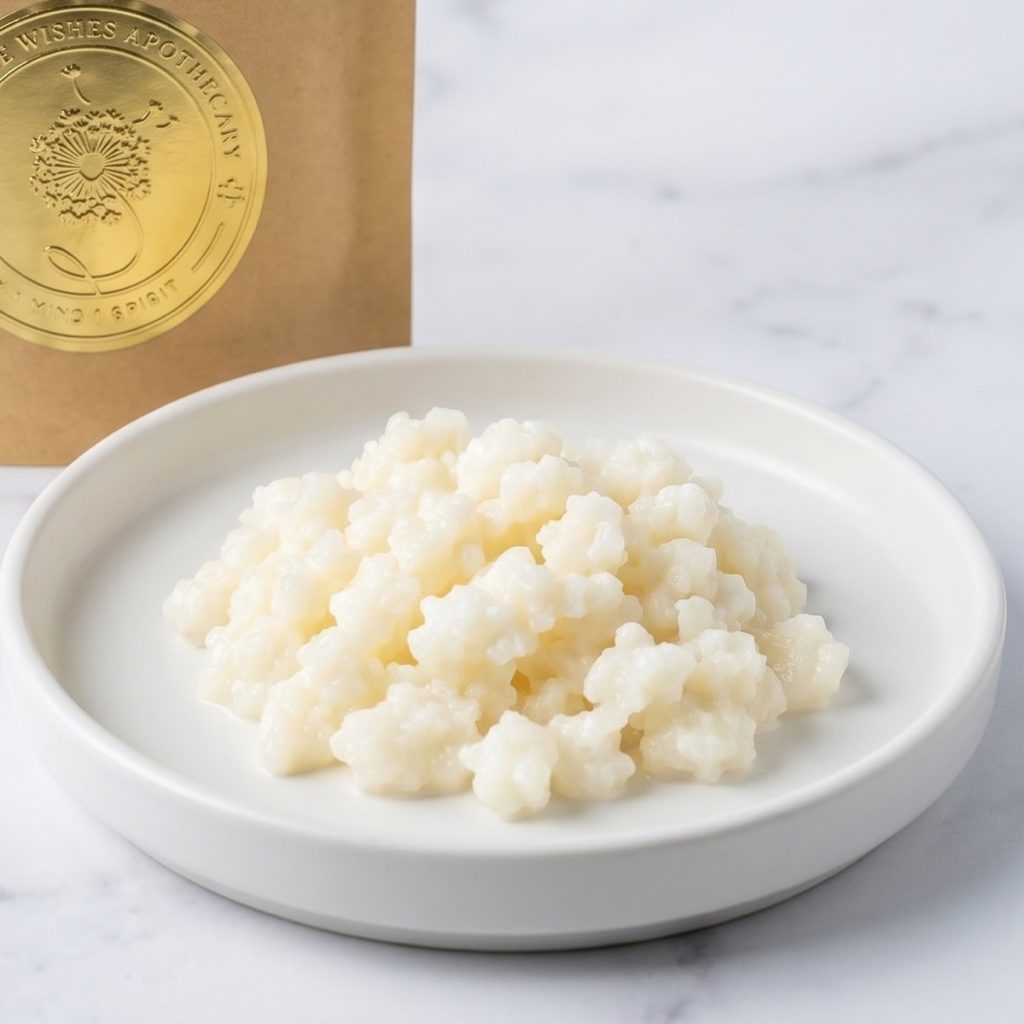
Live Organic Milk Kefir Grains
PROBIOTICS & YEASTS
Kefir grains contain a diverse community of approximately 30–60 species of beneficial bacteria and yeasts, including Lactobacillus, Lactococcus, Streptococcus, and Saccharomyces species. These microorganisms produce enzymes and short-chain fatty acids that support digestion and metabolic health. They adhere to intestinal cells, strengthen the mucosal barrier, improve lactose digestion, and help regulate immune function.
ORGANIC ACIDS
During fermentation, kefir microbes produce organic acids—primarily lactic and acetic acid. These compounds lower gut pH, creating an environment that inhibits harmful and pathogenic bacteria. In combination with naturally occurring ethanol (trace amounts) and bacteriocins, they support a balanced and resilient gut ecosystem.
BIOACTIVE PEPTIDES
Milk proteins are broken down during fermentation into bioactive peptides. These compounds have demonstrated anti-inflammatory, antimicrobial, and immune-modulating effects. They help regulate inflammatory signaling and may reduce intestinal inflammation associated with chronic conditions.
KEFIRAN
Kefiran is a unique polysaccharide produced by kefir cultures that forms the structural matrix of the grains. It functions as a prebiotic, selectively feeding beneficial bacteria. Kefiran has antioxidant and anti-inflammatory properties and may enhance mucosal immunity by increasing secretory IgA.
CONTRAINDICATIONS & PRECAUTIONS
Kefir is generally well tolerated; however, use caution if you are:
• Pregnant or breastfeeding (limited research available) • Immunocompromised (live cultures may pose risk) • Sensitive to dairy or histamines
When first introducing kefir, mild symptoms such as bloating, cramping, or constipation may occur. Kefir contains trace amounts of naturally occurring alcohol due to fermentation; individuals taking medications such as disulfiram should avoid use. Consult a healthcare professional if you have underlying conditions or are on immunosuppressive therapy.
REFERENCES
- Prado MR, Blandón LM, Vandenberghe LPS, et al. Milk kefir: composition, microbial cultures, biological activities, and related products. Front Microbiol. 2015;6:1177.
- Bourrie BCT, Willing BP, Cotter PD. The microbiota and health promoting characteristics of the fermented beverage kefir. Front Microbiol. 2016;7:647.
- Leite AMO, Miguel MAL, Peixoto RS, et al. Microbiological, technological and therapeutic properties of kefir: a natural probiotic beverage. Braz J Microbiol. 2013;44(2):341-349.
- Rosa DD, Dias MMS, Grześkowiak ŁM, Reis SA, Conceição LL, Peluzio MDCG. Milk kefir: nutritional, microbiological and health benefits. Nutr Res Rev. 2017;30(1):82-96.
- Farnworth ER. Kefir – a complex probiotic. Food Sci Technol Bull Funct Foods. 2005;2(1):1-17.
- Fiorda FA, de Melo Pereira GV, Thomaz-Soccol V, Rakshit SK, Pagnoncelli MGB, Soccol CR. Microbiological, biochemical, and functional aspects of sugary kefir fermentation. Food Microbiol. 2017;66:86-95.
$10.00

Ashwagandha Root
A deeply restorative adaptogen, Ashwagandha Root (Withania somnifera) has been treasured in Ayurvedic tradition for centuries for its ability to strengthen resilience and restore balance. Known as a “rasayana” or rejuvenative tonic, it supports the body’s natural capacity to adapt to life’s daily stressors and maintain equilibrium across the nervous, endocrine, and immune systems.
This tincture offers a stabilizing, grounding energy — not stimulating, but harmonizing. It helps moderate the body’s stress response, nourishing depleted reserves and supporting healthy adrenal function over time.
Crafted through a 60% organic cane ethanol extraction to preserve its full spectrum of constituents, this formula embodies the adaptogenic principle described by herbalist David Winston: to normalize rather than force, to strengthen rather than overstimulate, and to build vitality that endures.
Like the resilient root itself, Ashwagandha invites you to slow your rhythm, find your center, and cultivate calm strength from within.
Dosage
Take 2–4 mL (approximately 40–80 drops) up to three times daily in a small amount of water or directly on the tongue.
Best taken consistently over time for cumulative benefit, particularly during periods of emotional strain, fatigue, or high output.
Pairs well with restorative practices such as breathwork, yoga nidra, journaling, or quiet moments in nature.
Cautions
Generally well-tolerated. Consult a qualified healthcare provider before use if you are:
-
Pregnant or nursing
-
Sensitive to plants in the nightshade (Solanaceae) family
-
Managing hemochromatosis (excess iron) or hyperthyroid conditions
-
Taking sedatives or thyroid medications
Discontinue use if any adverse effects occur.
$25.00