
Sub-Total: $0.00
Medicinal Action

Fever Treatment
Fever treatment aims to balance the body’s natural defense mechanisms while providing relief from associated symptoms like chills or headaches. Herbal remedies for fever often act as febrifuges, diaphoretics, or immune-supporting agents. Elderflower (Sambucus nigra) promotes sweating to reduce fever and ease symptoms. Yarrow (Achillea millefolium) is a traditional remedy that supports circulation and helps the body break a fever. Peppermint (Mentha × piperita) cools the body and provides relief from fever-related discomfort. These herbs, combined with rest and hydration, offer a natural, supportive approach to fever management and recovery.

Products containing Fever Treatment
Discover our collection of artisanal salves for holistic healing.
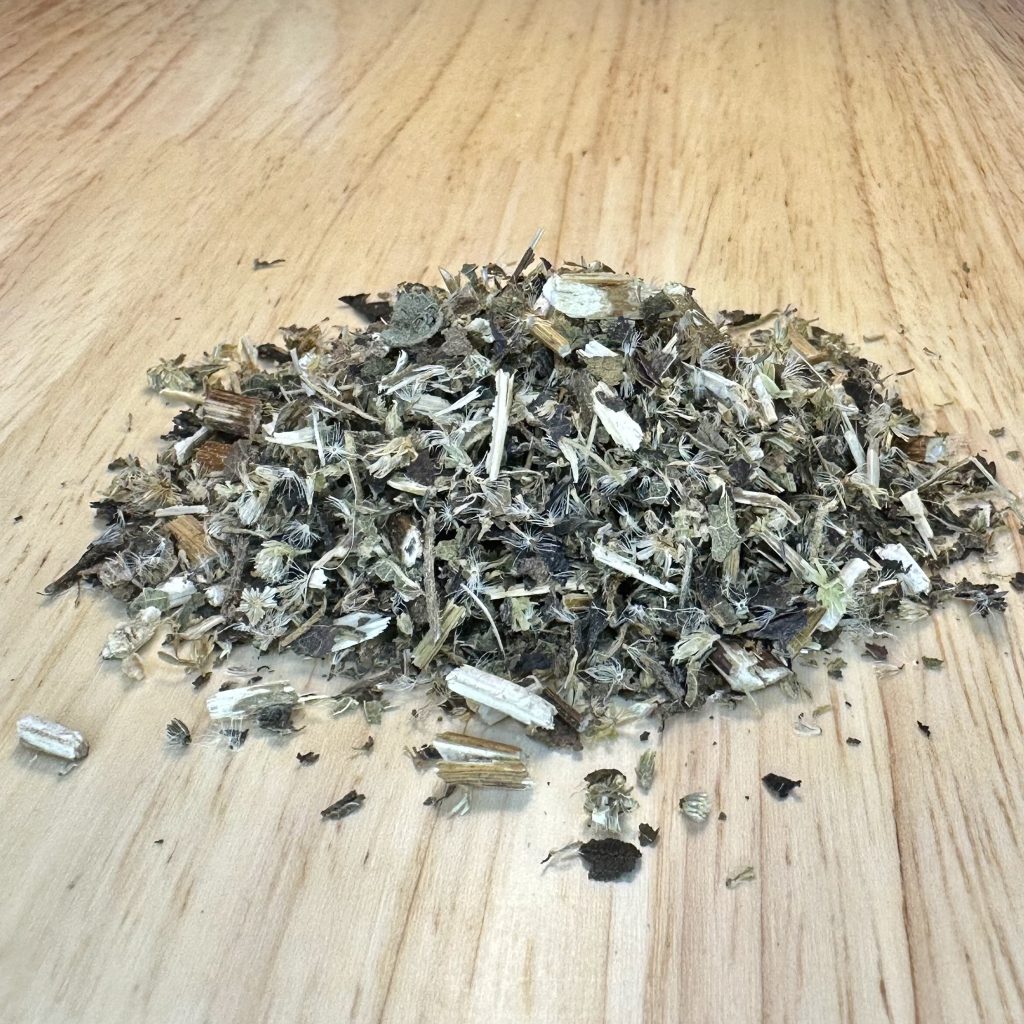
Boneset (Eupatorium perfoliatum)
Carefully sourced, regenerative organic, and packaged by hand, our herbs are sold by the ounce. To order more, adjust the quantity in 1 oz increments.
Example: Quantity 4 = 4 ounces.
Monographs with the (Fever Treatment) function

Live Organic Milk Kefir Grains
PROBIOTICS & YEASTS
Kefir grains contain a diverse community of approximately 30–60 species of beneficial bacteria and yeasts, including Lactobacillus, Lactococcus, Streptococcus, and Saccharomyces species. These microorganisms produce enzymes and short-chain fatty acids that support digestion and metabolic health. They adhere to intestinal cells, strengthen the mucosal barrier, improve lactose digestion, and help regulate immune function.
ORGANIC ACIDS
During fermentation, kefir microbes produce organic acids—primarily lactic and acetic acid. These compounds lower gut pH, creating an environment that inhibits harmful and pathogenic bacteria. In combination with naturally occurring ethanol (trace amounts) and bacteriocins, they support a balanced and resilient gut ecosystem.
BIOACTIVE PEPTIDES
Milk proteins are broken down during fermentation into bioactive peptides. These compounds have demonstrated anti-inflammatory, antimicrobial, and immune-modulating effects. They help regulate inflammatory signaling and may reduce intestinal inflammation associated with chronic conditions.
KEFIRAN
Kefiran is a unique polysaccharide produced by kefir cultures that forms the structural matrix of the grains. It functions as a prebiotic, selectively feeding beneficial bacteria. Kefiran has antioxidant and anti-inflammatory properties and may enhance mucosal immunity by increasing secretory IgA.
CONTRAINDICATIONS & PRECAUTIONS
Kefir is generally well tolerated; however, use caution if you are:
• Pregnant or breastfeeding (limited research available) • Immunocompromised (live cultures may pose risk) • Sensitive to dairy or histamines
When first introducing kefir, mild symptoms such as bloating, cramping, or constipation may occur. Kefir contains trace amounts of naturally occurring alcohol due to fermentation; individuals taking medications such as disulfiram should avoid use. Consult a healthcare professional if you have underlying conditions or are on immunosuppressive therapy.
REFERENCES
- Prado MR, Blandón LM, Vandenberghe LPS, et al. Milk kefir: composition, microbial cultures, biological activities, and related products. Front Microbiol. 2015;6:1177.
- Bourrie BCT, Willing BP, Cotter PD. The microbiota and health promoting characteristics of the fermented beverage kefir. Front Microbiol. 2016;7:647.
- Leite AMO, Miguel MAL, Peixoto RS, et al. Microbiological, technological and therapeutic properties of kefir: a natural probiotic beverage. Braz J Microbiol. 2013;44(2):341-349.
- Rosa DD, Dias MMS, Grześkowiak ŁM, Reis SA, Conceição LL, Peluzio MDCG. Milk kefir: nutritional, microbiological and health benefits. Nutr Res Rev. 2017;30(1):82-96.
- Farnworth ER. Kefir – a complex probiotic. Food Sci Technol Bull Funct Foods. 2005;2(1):1-17.
- Fiorda FA, de Melo Pereira GV, Thomaz-Soccol V, Rakshit SK, Pagnoncelli MGB, Soccol CR. Microbiological, biochemical, and functional aspects of sugary kefir fermentation. Food Microbiol. 2017;66:86-95.
$10.00
Eleuthero (Eleutherococcus senticosus)
In traditional Chinese medicine (TCM), Eleuthero has been used for over 2,000 years to fortify Qi and support the Spleen and Kidney meridians. It was traditionally used to increase stamina, combat fatigue, and strengthen the immune system, especially during recovery from illness. In Russia, Eleuthero gained prominence during the Soviet era for its ability to enhance athletic performance, mental clarity, and stress resilience.
Current Uses:
Today, Eleuthero is widely used as an adaptogen, helping the body adapt to stress and improve endurance and energy. It is commonly used for:
- Increasing energy and stamina during periods of fatigue or physical exertion
- Supporting immune function, particularly in times of stress or recovery
- Balancing stress responses, promoting mental clarity and focus
- Enhancing athletic performance and aiding in post-exercise recovery
- Improving overall vitality and resilience to environmental stressors
*To learn more about this plant’s traditional and modern uses, energetics, and potential contraindications, visit our Materia Medica section and search for this herb by name. There, you’ll find detailed notes on safe use and preparation methods.
Price range: $15.00 through $45.00